Orqa Unveils the MRM2-10AI at Eurosatory: A Tactical Drone Designed to Dominate in the Age of Electronic Warfare
- Onboard compute platform ready to run customer supplied or third party AI models
- Hybrid communications architecture with IRONghost radio control and native fibre optic plus automatic failover
- Vision based terminal guidance for GNSS-denied operations
- Optional advanced thermal imaging
PARIS, June 11, 2026 /PRNewswire/ -- Orqa - Europe's leading developer and manufacturer of drones made without Chinese components - today announces the launch of the MRM2-10AI, a next-generation tactical drone purpose-built for contested battlefield environments and the realities of modern electronic warfare.
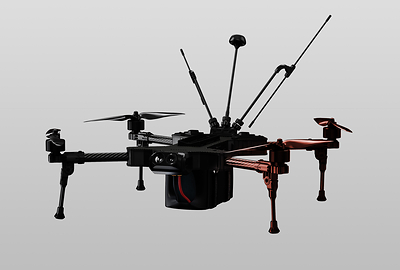
With armed forces increasingly facing radio-frequency jamming, GNSS disruption, and electronic attack, the MRM2-10AI sets a new standard in resilient communications, intelligent autonomy, and mission continuity, enabling it to succeed where conventional drone systems struggle.
At the heart of the platform is a hybrid communications architecture combining Orqa's proven IRONghost radio control system with native fiber-optic integration and automatic communications failover. This enables the MRM2-10AI to use either communication method without platform reconfiguration and instantly transition to the radio-frequency link if the fiber-optic connection is broken.
The MRM2-10AI features a powerful new Auto Pilot Board that unlocks a series of cutting-edge autonomous capabilities, including vision-based terminal guidance for GNSS-denied operations, advanced computer vision applications, battlefield analytics, and collaborative multi-drone operations.
A fully open development architecture and a supported third-party Developer Program (developer.orqafpv.com) provides a foundation for AI capabilities and software solutions, while ATAK compatibility supports seamless integration with existing battlefield management and situational awareness systems.
"As the nature of warfare continues to evolve, drone operators require systems that can remain effective in contested spaces," said Srdjan Kovacevic, co-founder and CEO of Orqa. "The MRM2-10AI combines resilient communications, onboard intelligence, and autonomous capability in a platform designed to keep missions moving. It represents the next step in tactical drone capability for today's armed forces."
Available in multiple configurations to meet a variety of mission requirements - including variants equipped with advanced thermal imaging and enhanced processing capabilities - the MRM2-10AI is being officially launched at Eurosatory 2026, the global event for defence and security in Paris.
 View original content to download multimedia:https://www.prnewswire.co.uk/news-releases/orqa-unveils-the-mrm2-10ai-at-eurosatory-a-tactical-drone-designed-to-dominate-in-the-age-of-electronic-warfare-302797302.html