Angel Yeast's Angeopro™ Yeast Protein Achieves Dual International Certifications
Setting a New Standard in High-Quality Nutrition
SHANGHAI, Sept. 23, 2026 /PRNewswire/ -- Angeopro™ Yeast Protein range F80, F84, Hi90-A, and S80-A, developed by Angel Yeast (SSE: 600298), recently received Monash University Low FODMAP CertifiedTM status. Angeopro™ Yeast Protein products manufactured by Angel Yeast (Yichang High-Tech Zone) Co., Ltd received the authoritative Clean Label Project (CLP) certification.
This dual recognition underscores Angeopro™ Yeast Protein's gentleness on digestion and commitment to rigorous quality standards, supporting its suitability for a wider range of consumers and strengthening its position as a high-quality protein ingredient for the global nutrition market.
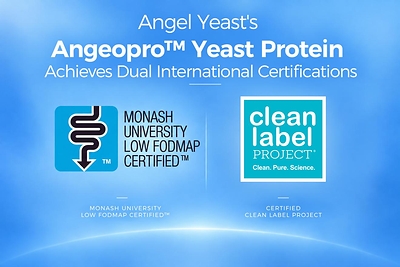
Monash University's Low FODMAP certification confirms that the Angeopro™ Yeast Protein range is low in FODMAPs, a group of fermentable short-chain carbohydrates (oligosaccharides, disaccharides, monosaccharides and polyols). Achieving the low FODMAP certification means that the Angeopro™ Protein range is a suitable ingredient to use for low FODMAP food applications,[1] helping people with digestive sensitivities such as irritable bowel syndrome (IBS) minimize uncertainty in their food choices.
Clean Label Project® certification looks beyond the ingredient label to uncover hidden contaminants consumers can't see. Rigorous, independent third-party testing at an ISO 17025-accredited laboratory gives consumers something they can trust: verified assurance of what's really in the products they choose.
Global Recognition for Purity and Gut-friendly
Angel Yeast has consistently adhered to rigorous quality standards, leveraging its unique yeast protein bio-fermentation process to ensure sustainable production and high nutritional value.
With a high Biological Value (BV) and PDCAAS 1.0, the protein is easily absorbed and utilized by the body. The product is especially suitable for the elderly with reduced digestive enzyme secretion and for people with weaker gastrointestinal function.
Nutritionally, Angeopro™ Yeast Protein is a true standout ingredient:
- Complete amino acid profile: Contains all nine essential amino acids, along with a high proportion of BCAAs.
- Gut and immune support: Naturally contains β-glucan, a prebiotic that supports gut microbiota balance and immune regulation while supplementing protein.
- Versatile applications: Yeast protein is characterized by rapid initial digestion, high overall digestibility, and sustained amino acid release, establishing it as a full-cycle protein source with versatile nutritional applications, from daily nutritional supplementation to special dietary requirements.
Clean-Label Nutrition for Diverse Dietary Needs
On the dimensions of purity and safety, Angeopro™ Yeast Protein offers distinct natural advantages. Its clean ingredient profile is built on pillars that matter most to health-conscious consumers:
- Free From Common Allergens and Dietary Restrictions: Angeopro™ Yeast Protein is naturally lactose-free, gluten-free and free of common allergens. This makes it a versatile protein choice for people with lactose intolerance, gluten sensitivities, vegetarian & vegan diets and other special dietary requirements — with no compromises on nutrition.
- A Scientifically Verified "Clean Label": The CLP certification goes beyond the ingredient-simplification approach commonly associated with the term "clean label." Rather than simply reducing the ingredient list, CLP certification emphasizes the control of potential contaminants[2] through rigorous scientific testing.
Looking ahead, Angel Yeast will continue its dedication to benchmarking against high international standards, uphold its production philosophy of purity, safety and quality, and provide higher-quality yeast protein products to customers around the world.
Note: |
[1] Products made using this ingredient must be tested and be part of the Monash University Low FODMAP certification program to claim to be Monash low FODMAP certified. |
[2] CLP tests for a wide range of contaminants, depending on the product category. The standard panel includes bisphenols (A and S), heavy metals (arsenic, cadmium, lead, and mercury), pesticides (over 100 residues), and phthalates (BBP, DBP, DEHP, and DHP). Additionally, acrylamide testing is conducted for products that undergo heat processing during manufacturing. |

 View original content to download multimedia:https://www.prnewswire.co.uk/news-releases/angel-yeasts-angeopro-yeast-protein-achieves-dual-international-certifications-302887575.html